

The Unsent Project is one of those rare corners of the internet that feels more honest than almost anywhere else. Somewhere right now, someone is typing out the exact words they never had the courage to say out loud — to a first love, to someone they lost, to a version of themselves from years ago. They’ll never hit send. But they’ll hit publish, anonymously, on a page just like this one. That simple, quiet act is the entire idea behind The Unsent Project, and it has grown into one of the internet’s most powerful, most human communities.
What Exactly Is The Unsent Project?
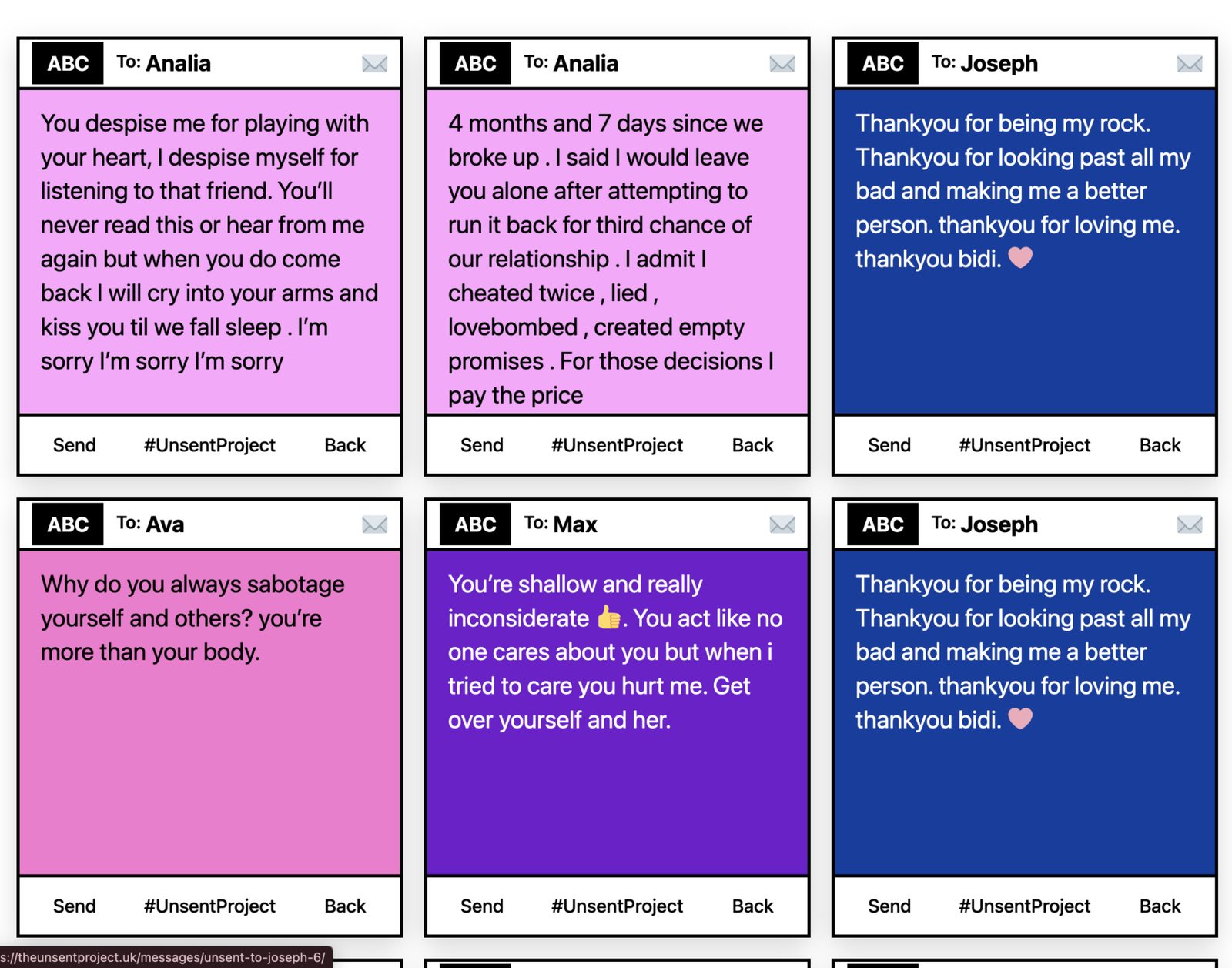
At its core, The Unsent Project is a public, anonymous archive of messages that people wrote but never actually sent. Anyone can submit one: you pick a recipient (a first name, a nickname, or just initials), you choose a color that matches the emotion behind it, and you write the message itself — as short or as long as it needs to be. No login, no real name, no way for the other person to ever see it unless they happen to stumble across it themselves.
That’s really what makes The Unsent Project different from a diary entry or a private note. It’s private in content but public in form — thousands of strangers reading your exact words without ever knowing it was you, and you reading theirs the same way. There’s something oddly freeing about that mix of vulnerability and anonymity, and it’s a big part of why The Unsent Project keeps growing instead of fading like most internet trends do.
Where It All Began
The Unsent Project wasn’t dreamed up by a marketing team or a startup. It started in 2015 with one person: Rora Blue, an American visual artist. Blue was working through the emotions of a first love — the kind of relationship that ends without ever really being said out loud — and wanted a way to process it that didn’t involve actually confronting anyone.
So Blue asked a simple question: what color do you think of when you picture your first love? People were invited to submit a color, a name (or just initials), and the message they never sent. Red for a love that burned too fast. Blue for an ache that never quite left. It was personal, anonymous, and strangely universal.
In Blue’s own words, shared in an interview with Framebridge: “I honestly had no idea that it was a concept that would resonate with so many people. It felt wonderful to be able to give other people a place where they could express themselves anonymously.”
From One Idea to Millions of Voices
What began as a small art project turned into something much bigger than anyone expected. Submissions poured in from every corner of the world — in dozens of languages, about every kind of relationship: first loves, best friends, parents, exes, people who passed away, and sometimes just a version of the writer’s own past self.
By the mid-2020s, the archive had grown to over five million submitted messages, according to reporting from 1-800-Flowers’ Everyday Moments blog. Blue later expanded the concept with a sister project, After the Beep, which collects voicemails people can’t bring themselves to delete — the same idea, just in a different medium.
The Psychology Behind Why This Actually Works
There’s real science behind why writing a message you’ll never send feels so good, even before The Unsent Project turned it into a shared, public ritual. Long before this became an internet phenomenon, psychologist Dr. James Pennebaker was studying what happens when people write honestly about their most difficult emotions, whether or not anyone else ever reads it.
His research, published in Perspectives on Psychological Science and discussed by the American Psychological Association, found that expressive writing is linked to reduced anxiety, better emotional processing, and even measurable physical health benefits over time. Just putting the words down on a page changes how we relate to the memory — and sometimes, to the person we’re writing to.
That’s really the quiet magic behind The Unsent Project. It was never actually about the person on the other end reading it. It’s about the writer finally hearing themselves say the thing out loud, even if “out loud” just means a few sentences typed into a colored box that a few thousand strangers might scroll past.
Why Do We Write Letters We Know We’ll Never Send?
It turns out there’s real psychology behind why this feels so good. Long before “unsent letters” were a viral internet format, psychologist Dr. James Pennebaker was studying what happens when people write honestly about their most difficult emotions — even if no one else ever reads it.
His research, published in Perspectives on Psychological Science and discussed by the American Psychological Association, found that expressive writing — even about things we never share — is linked to reduced anxiety, better emotional processing, and even measurable physical health benefits. Just putting the words down changes how we relate to the memory and, sometimes, to the person we’re writing to.
That’s really the quiet magic of an unsent letter: it’s not about the person on the other end. It’s about finally hearing yourself say it.
What Kind of Messages Do People Actually Share?
If you spend any time browsing an Unsent Project style archive, you’ll notice the messages fall into a few familiar categories, even though every single one feels completely personal. There are the first-love letters — young, a little dramatic, full of “you’ll never know how much” and “I still think about you sometimes.” There are the grief messages, often the hardest to read, written to someone who passed away, full of things the writer wishes they’d said while they still could.
There are apology letters to friends who drifted away without a real goodbye. There are angry messages to people who hurt the writer, sometimes raw and unfiltered because the writer knows the person will never actually read it. And there are the messages to the writer’s own past self—a strange, tender category where people forgive themselves, or warn themselves through a 7 Powerful Color emotional palette, or just say “you did the best you could” to a version of themselves from years earlier.
What ties all of it together is that none of these messages were written for an audience. They were written because the person needed to write them, and The Unsent Project just happened to give them a place to put it down.
Why People Keep Coming Back
Most internet trends fade within a few months. The Unsent Project has done the opposite — it’s been quietly growing for over a decade, and it still feels just as relevant as the day it started. Part of that staying power comes down to timing: there’s never a shortage of things people wish they’d said. New first loves happen every year. People still lose parents, friends, and partners. Every generation rediscovers the same universal feeling of carrying around words they never got to say.
The other part is simply how good it feels to not be alone in that. Reading someone else’s unsent message — a total stranger, from somewhere else in the world — and recognizing your exact feeling in their exact words is a strange kind of comfort. It’s proof that whatever you’re carrying, someone else has carried something close to it too.
Where We Fit Into the Story
The Unsent Project, as a concept, now lives across a number of independent community platforms built by people who found the idea just as moving as we did — and this site is one of them. We’re not the original project, and we’re not affiliated with or endorsed by Rora Blue’s site — but we’ve built this space with the same spirit: a place where anyone can leave the words they never got to say, safely and anonymously, and read the words others have left behind.
Every message on this site was written by someone real, about something real. Scroll through the homepage and you’ll find heartbreak sitting next to gratitude, anger next to forgiveness — thousands of small, honest moments that never made it to a real inbox.
How This Site Continues That Same Spirit
To be fully transparent: this site is not the original Unsent Project, and it isn’t affiliated with or endorsed by Rora Blue’s project. But we built this space with the exact same spirit in mind — a place where anyone can leave the words they never got to say, safely and anonymously, and read the words others have left behind.
Every message here was written by someone real, about something real. Scroll through the homepage and you’ll find heartbreak sitting right next to gratitude, anger next to forgiveness — thousands of small, honest moments that never made it to an actual inbox, phone, or conversation. It’s a small piece of the much larger movement that The Unsent Project started back in 2015, still going strong all these years later.
How The Unsent Project Grew Into a Global Movement
What began as a personal art piece turned into something far bigger than Rora Blue ever expected. Submissions started pouring in from every corner of the world, in dozens of languages, about every kind of relationship imaginable — first loves, best friends, parents, exes, people who had passed away, and sometimes just a version of the writer’s own past self.
By the mid-2020s, the original archive had grown to more than five million submitted messages, according to reporting from 1-800-Flowers’ Everyday Moments blog. That kind of scale is almost hard to picture — five million private moments, each one written by a real person, sitting quietly in public for anyone to find. Blue later expanded on the idea with a sister project called After the Beep, which collects voicemails people can’t bring themselves to delete, using that same color-and-emotion format that made The Unsent Project so recognizable.
The concept also spread far beyond the original site. Because the idea itself — write what you never sent, attach a color, stay anonymous — is so simple and so universally understood, independent communities inspired by The Unsent Project have popped up across the internet, each one carrying the same spirit forward in its own space.
Why The Unsent Project Resonates Across Generations
The enduring power of The Unsent Project lies in its ability to transcend generational shifts. While social media platforms rapidly evolve—shifting from text-heavy posts to short-form video and algorithmic feeds—the human need for emotional expression remains constant. The Unsent Project functions as an evergreen digital sanctuary because it captures universal milestones that every generation experiences: first heartbreaks, strained family dynamics, drifting friendships, and unrequited love.
Generational Shifts in Tech ──► Algorithmic Noise & Ephemeral Feeds
                                      │
                                      ▼
                      The Unsent Project Sanctuary
                     (Authenticity • Anonymity • Connection)
In a digital ecosystem often characterized by surface-level interactions and hyper-curated online personas, The Unsent Project stands as a counter-cultural space where authenticity is paramount. Users do not submit messages to gain followers, likes, or public recognition; they submit to The Unsent Project to unburden themselves. This non-performative nature is precisely why younger generations, often exhausted by online pressure, continually flock to The Unsent Project as both readers and contributors.
The Art of Emotional Color-Mapping in The Unsent Project
A defining signature of The Unsent Project is its innovative use of color psychology. When a contributor prepares to share their submission, The Unsent Project prompts them to associate their message with a specific hue that reflects their state of mind:
[Unspoken Emotion] ──► Select Color Tone ──► Visual Archive Card ──► Public Empathy
-
Reds and Crimsons: Typically chosen for intense, burning passion, sudden breakups, or lingering anger.
-
Soft Blues and Cyans: Often attached to bittersweet nostalgia, deep sadness, or memories of a love that gently faded.
-
Yellows and Warm Tones: Frequently selected for messages expressing gratitude, quiet hope, and fond reflection on past friendships.
-
Muted Grays and Blacks: Selected for grief, profound loss, and words dedicated to loved ones who have passed away.
This color-coding system turns The Unsent Project archive into a vibrant visual tapestry. As readers scroll through The Unsent Project, the spectrum of colors provides an instant intuitive cue to the emotional weight of each post, allowing for a deeply immersive and empathetic reading experience.
The Unsent Project as a Tool for Therapeutic Closure
Mental health professionals frequently highlight expressive writing as a powerful exercise for processing unresolved feelings. The Unsent Project takes the traditional concept of therapeutic letter writing and translates it into a digital, communal format.
| Stage of Expression | Traditional Private Journaling | The Unsent Project Experience |
| Primary Audience | Self-contained / Private | Anonymous global audience |
| Psychological Benefit | Cognitive offloading and clarity | Catharsis combined with validation |
| Social Impact | Isolated reflection | Realization of shared human experience |
| Longevity | Stored in physical notebooks | Preserved in The Unsent Project archive |
By archiving millions of confessions, The Unsent Project reassures individuals that their private heartbreaks, regrets, and unspoken wishes are shared by thousands of others around the globe.
How to Engage with The Unsent Project Responsibly
Participating in The Unsent Project—whether as a reader or a contributor—can be an emotionally profound experience. To get the most therapeutic value from The Unsent Project, consider the following guidelines:
-
Write for Yourself, Not the Recipient: Remember that the primary goal of submitting to The Unsent Project is your own internal relief, not reaching the person who inspired the note.
-
Protect Privacy and Identity: Always ensure that your submissions to The Unsent Project refrain from using full names, specific addresses, or identifiable personal details to maintain true anonymity.
-
Pace Your Reading: Browsing The Unsent Project archive can evoke strong emotional responses. Take breaks when reading heavy entries regarding grief or loss.
-
Embrace the Healing Process: Use the act of publishing your note on The Unsent Project as a symbolic gesture of letting go and moving forward.
Final Thoughts: The Legacy of Unspoken Words
As The Unsent Project continues to grow, its repository of human emotion grows richer every day. What began as an artistic experiment by Rora Blue has transformed into an enduring testament to human vulnerability. Whether you are looking to release a secret you have carried for years or simply looking for comfort in the words of strangers, The Unsent Project remains open—a silent, welcoming space where every unspoken voice can finally find its place.
Your Unsent Message Belongs Here Too
If there’s something you’ve been carrying — a sentence you’ve rewritten in your head a hundred times but never said — you don’t have to keep carrying it alone. Write it down. Pick a color. Let it go.
You can submit your own unsent message, or simply browse what others have already shared. Sometimes just reading someone else’s words is enough to feel a little less alone in yours.

No comments yet. Be the first to share your thoughts!