

The Unsent Project is known for something that feels surprisingly simple: people sharing the words they never sent to someone they once cared about.
But there is another part of the experience that catches people’s attention—the colors.
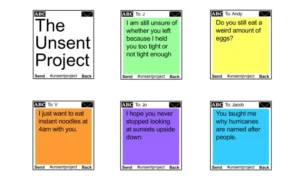
If you have explored messages connected with The Unsent Project, you may have noticed that different messages appear in different colors. At first, the colors can seem like nothing more than a visual design choice. But when you look more closely, they can make the messages feel even more emotional.
A short sentence about missing someone can feel completely different depending on the color surrounding it. A message about heartbreak may look darker and heavier, while a message about affection may feel softer and warmer.
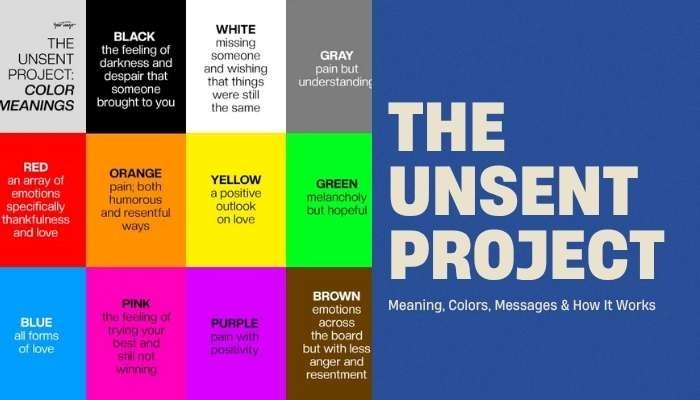
This naturally leads to a common question: What do the colors mean in The Unsent Project?
The answer is not always as straightforward as people expect. Colors can carry emotional associations, but individual messages and interpretations matter too. A color should not necessarily be treated as a fixed translation for one specific emotion.
Still, understanding the commonly discussed meanings behind the colors can make the experience more interesting.
Let’s take a closer look.
Unsent Project Colors Meaning
When people search for unsent project colors meaning, they are usually trying to understand why messages are presented in different colors and whether each color represents a specific emotion.
Color has always played a role in how humans experience emotions.
Red can feel intense. Blue can feel calm or lonely. Pink can suggest affection. Purple can feel mysterious, emotional, or reflective.
Because The Unsent Project is centered around personal feelings, it is natural for readers to connect these familiar color associations with the messages they see.
However, it is important not to assume that every message written in a particular color has exactly the same meaning.
Someone may associate blue with sadness, while another person may see blue as peaceful. Someone may connect red with romantic love, while another person may interpret it as anger or emotional intensity.
That is what makes color interesting.
It can influence how we initially feel about a message without completely determining what the writer meant.
Think of the colors as an emotional atmosphere rather than a strict dictionary.
The words tell you the story.
The color helps set the mood.
What Does Red Mean Unsent Project
So, what does red mean in The Unsent Project?
Red is one of the strongest colors emotionally. People commonly associate it with passion, romantic love, desire, anger, intensity, and deep emotional attachment.
Because of these associations, a red message can immediately feel powerful.
Imagine reading:
“I still love you, even though I know I shouldn’t.”
Now imagine that same sentence surrounded by a strong red background.
The emotional impact can feel much stronger.
Red is often connected with feelings that are difficult to ignore. It can represent the kind of emotion that refuses to disappear quietly.
For some people, red may naturally suggest romantic love. It can remind them of a relationship that once felt exciting and intense.
For others, red might represent anger.
Maybe the message says:
“I forgive you, but I will never forget what happened.”
In that situation, the color can feel more like emotional heat than romance.
This is why it is better to think about red as a color of intensity rather than giving it only one meaning.
Red can fit love.
It can fit desire.
It can fit anger.
It can even represent emotional pain.
The surrounding message is what gives the color its real context.
What Does Blue Mean Unsent Project
Blue is often associated with calmness, sadness, loneliness, distance, and reflection.
That makes it particularly interesting when looking at emotional messages.
When someone reads a blue message, they may immediately feel a quieter kind of emotion.
It does not necessarily feel dramatic.
Instead, it can feel like the kind of sadness someone experiences late at night when everything becomes quiet and old memories suddenly return.
For example:
“I don’t want you back. I just wish things had ended differently.”
A message like this can feel naturally connected with the emotional associations people have with blue.
Blue may also represent missing someone.
Consider:
“I wonder if you ever think about me the way I still think about you.”
There is no anger here.
There is no dramatic goodbye.
There is simply distance and longing.
That is one reason blue is often interpreted as a color connected to sadness or nostalgia.
At the same time, blue does not always have to mean sadness.
It can represent peace, honesty, stability, or emotional distance.
A person who has finally accepted the end of a relationship might connect with blue because it feels calm rather than painful.
So if you are wondering what does blue mean in The Unsent Project, the safest interpretation is that blue can evoke feelings such as sadness, calmness, loneliness, reflection, or longing—but the message itself remains the most important part.
Unsent Project Pink Meaning
The unsent project pink meaning is often connected with softer emotions.
Pink commonly reminds people of affection, tenderness, romantic feelings, sweetness, compassion, and emotional warmth.
Compared with red, pink can feel less intense.
Red may suggest overwhelming passion, while pink can feel like a quiet crush or gentle affection.
For example:
“I never told you, but talking to you was always the best part of my day.”
That message feels warm.
It does not necessarily describe dramatic love. It could represent a simple emotional connection that someone was too shy to express.
Pink can also represent memories of a relationship that had a softer side.
A person might write:
“I miss the way you used to make ordinary days feel special.”
The emotion is romantic, but it is also gentle.
Pink can therefore be associated with the early stages of love, affection that was never confessed, innocent memories, or the kind of emotional attachment that someone keeps quietly to themselves.
However, just like the other colors, pink does not have one universal meaning.
The writer’s words still matter more than the shade surrounding them.
A pink message can be romantic.
It can be friendly.
It can be nostalgic.
It can simply represent something emotionally soft.
Unsent Project Purple Meaning
Purple is a fascinating color because it often feels more mysterious than colors such as red or blue.
The unsent project purple meaning can be interpreted through associations with mystery, depth, imagination, spirituality, nostalgia, and complicated emotions.
Purple sits somewhere between the emotional associations of red and blue. Because of that, it can sometimes feel like a color for emotions that are difficult to describe.
Consider a message like:
“I don’t know whether I miss you, the memories, or the person I was when we were together.”
That is not simply happiness.
It is not simply sadness either.
It is complicated.
Purple can feel appropriate for emotions that exist somewhere in between.
It may also represent memories that have become almost dreamlike over time.
Think about someone remembering their first love years after the relationship ended. They may not want the relationship back. They may not even miss the person anymore.
But the memory still means something.
That kind of emotional complexity is often what people associate with purple.
Purple can therefore be seen as a color of depth and emotional ambiguity rather than one specific feeling.
Why Do Colors Matter in The Unsent Project?
You might wonder why colors matter at all.
After all, the words are what people came to read.
But visual elements can influence the way we experience written language.
Imagine seeing a sentence in plain black text:
“I still think about you.”
Now imagine seeing it displayed in a soft pink or deep blue environment.
Your emotional reaction may change slightly.
The words have not changed.
Your first impression has.
This happens because humans naturally connect colors with memories and emotions.
A color can make something feel warmer, colder, heavier, calmer, or more intense before we have even consciously analyzed it.
That can make a collection of anonymous messages feel more personal.
Are The Color Meanings Official?
This is where it is important to be careful.
People online often create lists explaining exactly what each color supposedly means. These lists can make it sound as though every color has a permanent and official definition.
But emotional color interpretation is not that simple.
Color meanings can depend on context, culture, personal experience, and the actual words in a message.
For example, blue is frequently associated with sadness, but it can also represent peace.
Red is often associated with love, but it can also represent anger.
Purple can feel mysterious, but it can also represent creativity or nostalgia.
So instead of asking only, “What does this color mean?” it can be more useful to ask:
What does this color make me feel when I read this particular message?
That question allows the message to remain personal.
Colors Can Change How We Read a Message
One of the most interesting things about emotional writing is that presentation matters.
A message can be only five words long and still carry years of history.
For example:
“I wish you stayed.”
That’s it.
But behind those four words could be a breakup, an argument, a missed opportunity, or years of regret.
The color does not explain that history.
Instead, it creates a mood around the words.
A darker color may make the message feel heavier.
A softer color may make it feel more vulnerable.
A bright color may make it feel hopeful or energetic.
This is why color and text work well together.
The words communicate the thought.
The color influences the emotional atmosphere.
Why People Are Drawn to Color-Coded Messages
Part of the attraction comes from curiosity.
When people see different colors, they naturally want to know whether there is a hidden system behind them.
They may ask:
“Does red mean love?”
“Does blue mean sadness?”
“Why is this message pink?”
“Is purple connected to a particular emotion?”
These questions encourage people to look more carefully at the messages.
But there is another reason.
People often recognize their own emotions in colors.
Someone going through heartbreak might naturally be drawn to blue.
Someone thinking about a secret crush might notice pink.
Someone remembering an intense relationship might connect with red.
Someone dealing with complicated feelings might find themselves drawn toward purple.
The color becomes a small emotional doorway into the message.
The Personal Meaning of Color
Perhaps the most important point is that color does not have to mean the same thing to everyone.
Your experience with a color may be completely different from someone else’s.
Maybe blue reminds you of peaceful evenings rather than sadness.
Maybe red reminds you of a specific person.
Maybe pink reminds you of your childhood.
Maybe purple reminds you of a relationship that changed your life.
Those personal connections can influence how you interpret an anonymous message.
That is one reason emotional art and writing can feel so personal.
The creator provides something.
The reader brings their own experiences.
The meaning develops somewhere between the two.
What Makes The Unsent Project So Relatable?
At the center of The Unsent Project are emotions that many people understand.
Most people have something they wish they had said.
Maybe it was:
“I love you.”
“I miss you.”
“I am sorry.”
“I forgive you.”
“I wish you stayed.”
“I wish I had stayed.”
“I still think about you.”
These sentences are simple, but the stories behind them can be complicated.
An anonymous message gives people a chance to express those feelings without having to explain their entire history.
And as a reader, you can recognize yourself in those words without knowing anything about the person who wrote them.
That anonymity is part of the appeal.
You do not need to know their name.
You only need to understand the feeling.
Final Thoughts
The colors connected with The Unsent Project add another emotional layer to messages that are already deeply personal.
Red may evoke passion, love, anger, or emotional intensity.
Blue can suggest sadness, loneliness, calmness, or reflection.
Pink often feels connected to affection, tenderness, and softer romantic emotions.
Purple can evoke mystery, depth, nostalgia, and complicated feelings.
But these should not be treated as rigid rules.
The most meaningful part of any unsent message is still the story behind the words.
A color can influence the mood, but the message gives it a voice.
And perhaps that is why these anonymous words can feel so familiar. Somewhere behind every short sentence is a person who once had something they desperately wanted to say—but for one reason or another, they never pressed send.


No comments yet. Be the first to share your thoughts!