

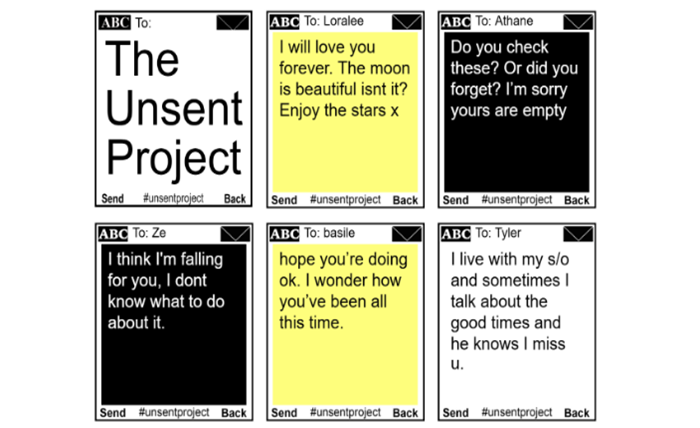
The Unsent Project is more than a collection of words that were never delivered. It is a place where people can put feelings into sentences when saying them out loud feels impossible.
Sometimes, we write a message and stare at the screen for several minutes before deciding not to send it. Maybe the person is no longer in our life. Maybe we are afraid of rejection. Maybe an apology comes too late. Or perhaps we simply do not know how someone will react if they finally hear what has been sitting inside our heart.
Those unsent words can carry an incredible amount of emotion.
A simple “I miss you” may represent months of loneliness. A short goodbye may hide years of memories. Even an apology that takes only a few seconds to write can contain regret that someone has carried for a very long time.
That is part of what makes The Unsent Project so emotionally relatable. It gives people a way to express thoughts that might otherwise remain completely private.
You do not have to be a writer to understand these messages. You only need to have loved someone, missed someone, lost someone, disappointed someone, or wished you could turn back time.
Below are some of the most relatable types of unsent messages and the emotions behind them.
Unsent Messages About Love
Love is one of the biggest reasons people write messages they never send.
There are feelings that seem too vulnerable to say directly. You may love someone deeply but worry that telling them will change the relationship. You may have loved someone who never felt the same way. Or you may still have feelings for an ex even though you know the relationship has ended.
Sometimes, an unsent message becomes the safest place for those feelings.
Here are some heartfelt examples:
- “I never told you how much happier my life felt whenever you were around.”
- “I loved you in ways I never knew how to explain.”
- “You probably never realized how often you crossed my mind.”
- “I wish I had been brave enough to tell you how I felt.”
- “Even after everything, a part of me still cares about you.”
- “You were never just another person to me. You became a part of my story.”
- “I wanted to tell you that you meant more to me than my words could ever explain.”
- “Sometimes I wonder what would have happened if we had both been honest.”
- “I hope someone loves you the way I always wanted to.”
- “You may never know this, but meeting you changed something inside me.”
Love does not always end when a relationship ends. Sometimes the relationship disappears, but the memories remain.
That is why love-related unsent messages can feel so personal. They allow people to acknowledge what they felt without expecting anything in return.
Unsent Messages Sad
Some messages are written during the moments when emotions become too heavy to keep inside.
Sadness often makes people want to reach out to someone they trust. But when that person is no longer available—or when contacting them would only make things more complicated—the words stay unsent.
These messages can be quiet, honest, and painful.
- “I wish you knew how difficult some days have been without you.”
- “I smile around everyone, but sometimes I feel completely exhausted inside.”
- “I miss the person I used to be before everything changed.”
- “There are days when I still wish I could talk to you.”
- “I never thought losing you would leave such a strange emptiness behind.”
- “I wish I could explain how much your absence still affects me.”
- “Some memories hurt because they remind me of how happy I once was.”
- “I have learned how to continue living, but I have not forgotten.”
- “Nobody knows how many times I almost reached out.”
- “I wish healing happened as quickly as people told me it would.”
Sadness does not always look dramatic.
Sometimes it looks like deleting a message before sending it. Sometimes it is opening an old conversation and closing it again. Sometimes it is typing someone’s name into a search bar and then deciding not to contact them.
An unsent message can capture exactly that kind of quiet sadness.
Unsent Messages I Miss You
“I miss you” sounds like a simple sentence, but it can mean hundreds of different things.
It can mean, “I miss talking to you.”
It can mean, “I miss who I was when I was with you.”
It can mean, “I wish you were here.”
Or sometimes it simply means, “I still haven’t completely moved on.”
Here are some emotional unsent messages I miss you examples:
- “I miss you more on ordinary days than I ever expected.”
- “I miss the little conversations that once felt so unimportant.”
- “I still want to tell you about the random things that happen during my day.”
- “I miss hearing your voice when everything else feels overwhelming.”
- “I wish I could send you one message without reopening everything.”
- “I miss you, but I know missing you does not mean I should come back.”
- “Sometimes I see something you would have loved and instinctively want to tell you.”
- “I miss the comfort of knowing you were only one message away.”
- “I wonder if you ever miss me too.”
- “I still miss you, even though I have learned how to live without you.”
Missing someone does not necessarily mean you want them back.
That distinction is important.
You can miss someone and still understand that the relationship was not right. You can appreciate the memories without wanting to repeat the past. You can love someone from a distance and still choose yourself.
Sometimes writing “I miss you” is simply a way of accepting that the person mattered.
Unsent Goodbye Messages
Goodbyes are rarely as simple as saying goodbye.
When someone leaves your life, there are often dozens of things you wish you had said. Maybe you wanted to thank them. Maybe you wanted to tell them that you were hurt. Maybe you wanted one final conversation that never happened.
An unsent goodbye message can provide that missing ending.
Here are some examples:
- “Goodbye. I hope life gives you everything we could not give each other.”
- “I am finally letting you go, even though a part of me still wants to hold on.”
- “Thank you for the memories. I will carry the good ones with me.”
- “I wish our story had ended differently, but I accept that it has ended.”
- “You will always be part of my past, but you no longer have to be part of my future.”
- “I wanted one last conversation, but maybe silence is the closure we both need.”
- “I hope you find happiness, even if I am no longer part of it.”
- “Goodbye to the version of us that I kept hoping would return.”
- “I am not angry anymore. I just think it is time for both of us to move forward.”
- “This is the goodbye I never had the courage to say.”
Sometimes goodbye is not about anger.
It is about acceptance.
You can leave someone behind while still being grateful for the time you shared. You can remember someone fondly without keeping the door open forever.
That is what makes goodbye messages so powerful: they often represent the moment when someone finally chooses to move forward.
Unsent Apology Messages
An apology can be one of the hardest messages to send.
Maybe you made a mistake. Maybe you said something you did not mean. Perhaps you did not appreciate someone until they were gone. Sometimes the hardest part is knowing that saying “I’m sorry” may not repair the damage.
So the apology remains unsent.
Here are some examples:
- “I am sorry for the things I said when I was angry.”
- “I wish I had understood your feelings before it was too late.”
- “I am sorry that I hurt you when all I wanted was to be understood.”
- “You deserved better from me, and I realize that now.”
- “I cannot change what happened, but I wish I could.”
- “I am sorry for not appreciating you while I had the chance.”
- “I should have listened instead of trying to prove that I was right.”
- “I hope one day you can forgive me, even if you never want me back.”
- “I regret the moment my pride became more important than our relationship.”
- “I am sorry. Not because I want anything from you, but because you deserved an apology.”
A genuine apology is not always about getting another chance.
Sometimes it is simply about taking responsibility.
There are moments when contacting someone could reopen an old wound, so writing the apology without sending it can still help someone process their regret.
The important thing is recognizing what happened, understanding the consequences, and learning from it.
Why Do People Write Unsent Messages?
People write unsent messages for many different reasons.
Sometimes they want closure. Sometimes they want to express love. Sometimes they are angry and need somewhere to put their thoughts before saying something they might regret.
Writing can create distance between an emotion and an immediate reaction.
Imagine typing everything you want to say to someone but never pressing send. You can be completely honest. You do not have to worry about their response. You do not have to defend yourself. You do not have to wonder whether they will misunderstand your words.
For some people, that honesty is comforting.
An unsent message can also help organize confusing emotions.
Instead of thinking, “I feel terrible,” you might realize that you actually feel disappointed, lonely, guilty, angry, grateful, or simply nostalgic.
Putting those feelings into words can make them easier to understand.
The Emotional Power Behind Unsent Messages
There is something strangely powerful about words that were never delivered.
A sent message creates a conversation. An unsent message creates reflection.
When you send something, you immediately begin thinking about the other person’s reaction. Will they reply? Will they ignore it? Will they misunderstand? Will they forgive you?
But when a message remains unsent, the focus shifts back to you.
What did you really want to say?
Why did you want to say it?
What were you hoping would happen?
And perhaps most importantly, do you still need to say it?
These questions can reveal feelings that have been hidden for a long time.
When an Unsent Message Is Better Than Sending It
Not every feeling needs to be delivered to the person who caused it.
Sometimes sending a message can reopen a relationship that you have worked hard to leave behind. Sometimes the other person has moved on. Sometimes contacting them would create more confusion than peace.
Writing the message without sending it can be a healthier choice in those situations.
You can say everything.
You can be angry.
You can be emotional.
You can say “I love you,” “I hate what happened,” “I miss you,” or “I’m sorry.”
Then you can close the message and take a breath.
The goal is not always communication.
Sometimes the goal is understanding yourself.
How to Write Your Own Unsent Message
You do not need complicated words to write something meaningful.
Start with the sentence you are most afraid to say.
Maybe it is:
“I still love you.”
“I am angry with you.”
“I miss you.”
“I forgive you.”
“I am sorry.”
“I am finally letting you go.”
Then explain why.
Do not worry about grammar or making the message sound beautiful. Write the way you would actually speak if there were no consequences.
You can also ask yourself three simple questions:
What do I wish they knew?
What am I still carrying?
What do I need to let go of?
Your answers may become the message you needed to write all along.
The Unsent Project and the Stories We Never Tell
At its heart, The Unsent Project represents something deeply human: the need to express what we cannot always say.
Everyone has words they have kept inside.
Some are romantic.
Some are painful.
Some are apologies.
Some are goodbyes.
Some simply say, “I wish you were here.”
These messages remind us that emotional experiences are rarely as simple as they appear from the outside. Someone who looks completely fine may still be carrying an unfinished conversation in their heart.
That is why unsent messages can feel so familiar.
You may read a message written by a stranger and suddenly think, “I have felt exactly this.”
And perhaps that is the most beautiful thing about sharing these private emotions. Even when the original message was written for one person, the feeling can be understood by thousands of others.
Final Thoughts
The Unsent Project gives a voice to thoughts that often remain hidden.
Whether the words are about love, sadness, missing someone, saying goodbye, or asking for forgiveness, an unsent message can hold a surprising amount of emotion.
You do not always need a response to express how you feel.
Sometimes writing the words is enough.
Sometimes the message is not meant for another person at all. It is meant for the version of yourself who needed to say those words, understand those feelings, and finally begin moving forward.
And perhaps that is why an unsent message can be so powerful.
It does not need to be delivered to be real.



No comments yet. Be the first to share your thoughts!