

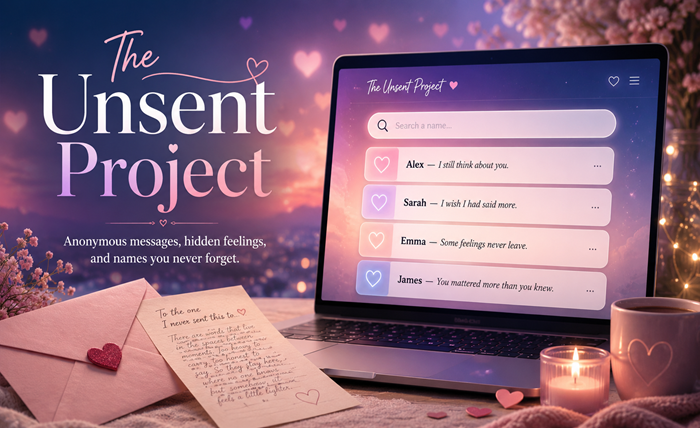
The Unsent Project has become one of those corners of the internet that people visit out of curiosity and then unexpectedly stay for the emotions. At first, it may seem simple: anonymous messages written to people who may never read them. But once you start browsing, the experience can feel surprisingly personal.
Maybe you search your own name.
Maybe you type the name of an ex, a first love, an old friend, or someone you still think about occasionally.
Then you find a short message that sounds almost too familiar.
That is when curiosity turns into emotion.
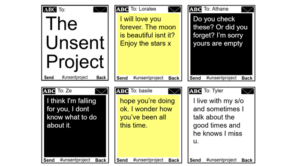
The beauty of The Unsent Project is not necessarily about proving who wrote a message. It is about seeing how many people carry words they never managed to say. Some messages are romantic. Some are painful. Others are full of regret, gratitude, anger, or quiet acceptance.
Many are only a few words long, yet they can feel heavier than an entire letter.
A person might write:
“I wish I had told you before it was too late.”
Someone else might say:
“I hope you are happy, even if it isn’t with me.”
These messages are powerful because most of us have had something we wanted to say but didn’t.
That is why people search names so often on anonymous message platforms. They are not always looking for facts. Sometimes they are looking for a feeling, a memory, or a little bit of closure.
Still, there is one thing worth remembering from the beginning: a message addressed to a familiar name does not prove that it was written by someone you know.
Anonymous messages are exactly that—anonymous.
The real value often comes from what you feel while reading them.
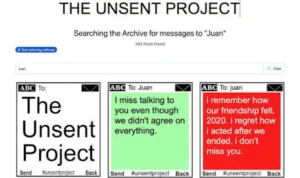
unsent project find my name
The search phrase unsent project find my name usually comes from one very human question:
“Did someone ever write something about me?”
It is an irresistible thought.
Imagine discovering a message addressed to your name saying:
“You probably never knew how much you mattered to me.”
Even without knowing who wrote it, your mind immediately starts searching through old memories.
Could it have been a former classmate?
An old partner?
Someone from work?
A friend you lost contact with?
This is why searching your name can become emotionally interesting very quickly.
When people use The Unsent Project, they may search common names and browse through anonymous submissions connected to those names. But a name alone cannot identify the intended recipient.
If your name is Sarah, James, Alex, Emma, Jack, or Olivia, there may be many people with the same name.
The healthiest way to approach the experience is with curiosity rather than certainty.
Instead of thinking:
“This message must be about me,”
try thinking:
“This message reminds me of something from my own life.”
That small change makes the experience more meaningful and much less confusing.
Sometimes the best thing you find while searching your own name is not a secret message from someone else.
Sometimes you find words that help you understand yourself.
unsent messages to alex
Searching for unsent messages to alex may bring up messages associated with one of the most common kinds of names found in anonymous collections.
Alex can refer to many different people.
It could be a former boyfriend.
A girlfriend.
A close friend.
A sibling.
A childhood classmate.
Or someone the writer barely knew but never forgot.
That is what makes name-based searches so interesting.
One person might write:
“Alex, I still think about the last conversation we had.”
Another could say:
“I hope you know I was never angry. I was just hurt.”
And someone else might simply write:
“I miss you.”
Three different messages.
Three completely different relationships.
That variety is part of what makes The Unsent Project compelling. A name becomes the only visible connection between stories that may have nothing else in common.
When reading messages to Alex, try not to focus too heavily on identifying the writer.
Focus instead on the emotion.
Is it regret?
Love?
Gratitude?
Anger?
Longing?
Sometimes a single anonymous message can remind you of something you have never been able to say yourself.
And perhaps that is why these searches feel so personal.
unsent messages to sarah
People looking for unsent messages to sarah may find themselves reading dozens of completely different emotional stories.
Sarah is a common name, which means the messages connected to it could represent people from many different countries, backgrounds, and relationships.
One message might come from someone remembering their first love.
Another could be written by a former friend.
Another might be from someone who never confessed how they felt.
Imagine reading:
“Sarah, you were the right person at the wrong time.”
That sentence could apply to thousands of relationships.
Yet if Sarah is your name—or the name of someone important to you—it can suddenly feel incredibly specific.
This is where The Unsent Project creates an unusual emotional experience.
The message belongs to a stranger.
But the feeling can belong to you.
It is easy to forget how universal certain emotions are.
People fall in love.
They get scared.
They make mistakes.
They leave too early.
They stay too long.
They miss people they know they should probably forget.
Anonymous messages remind us that these experiences are shared by people everywhere.
unsent messages to jack
Searching for unsent messages to jack can bring the same mix of curiosity and nostalgia.
Maybe Jack is someone from your past.
Maybe it is your own name.
Or perhaps you simply came across a message and wanted to see whether there were more.
You may read something like:
“Jack, I wish we had stayed friends.”
That line could represent years of history in only seven words.
A friendship may have ended after an argument.
Two people may have grown apart.
Someone may have moved away.
Sometimes relationships disappear without any dramatic ending at all.
They simply fade.
That kind of unfinished relationship is exactly the sort of experience people often write about in The Unsent Project.
Not every unsent message is about romantic love.
Some of the most emotional messages are about friendship.
A person may regret not checking in.
They may miss someone they once spoke to every day.
They may wish they could return to a time when the friendship felt effortless.
When you read messages like these, you may start thinking about people from your own life.
And that is often where the real emotional connection begins.
unsent messages to emma
There is something especially interesting about searching unsent messages to emma because a familiar name can immediately make anonymous words feel personal.
Imagine seeing:
“Emma, I never stopped being proud of you.”
Without context, we know almost nothing.
Who wrote it?
Why did they never say it?
What happened between them?
Did Emma ever know?
Those unanswered questions are part of the appeal.
The short format of anonymous messages leaves room for imagination.
Readers naturally fill in the missing pieces with their own memories and experiences.
This is why The Unsent Project can feel different from reading a traditional story.
A normal story gives you characters, background, and an ending.
An unsent message gives you a fragment.
You build the rest in your own mind.
Sometimes that fragment can feel more powerful than a complete story because it reminds you of something unfinished in your own life.
Perhaps you once wanted to tell someone you were proud of them.
Perhaps someone encouraged you when you needed it most.
Or maybe you are still waiting to hear certain words from someone important.
Anonymous messages have a way of bringing those emotions back to the surface.
unsent messages to olivia
People searching unsent messages to olivia may be looking for romance, friendship, regret, or simply curiosity.
A message might say:
“Olivia, I wish I had been brave enough to tell you.”
Immediately, you wonder what the writer wanted to say.
Was it love?
An apology?
A goodbye?
That uncertainty is what makes the message powerful.
People often avoid difficult conversations because they are afraid of what will happen afterward.
Sometimes we stay silent because we fear rejection.
Other times we wait for the “right moment” until the moment disappears.
Then the words remain in our heads.
An anonymous platform gives those words somewhere to go.
This is one of the reasons The Unsent Project resonates with so many readers.
You may not know the writer.
You may not know Olivia.
But you understand what it feels like to wish you had said something sooner.
And that emotional recognition can make a stranger’s message feel strangely familiar.
unsent messages to james
Searching for unsent messages to james can lead to messages about almost every kind of relationship imaginable.
James might be a former partner.
A brother.
A father.
A friend.
A person someone met only once.
Anonymous projects remind us that meaningful relationships do not always fit into neat categories.
Sometimes someone who was in your life for only a few months leaves a stronger memory than someone you knew for years.
A message might say:
“James, you probably don’t remember me, but I’ll always remember you.”
That is a fascinating idea.
Two people can share the same moment and remember it completely differently.
For one person, it may have been ordinary.
For the other, unforgettable.
That is why The Unsent Project is not only about love.
It is also about memory.
People write because they do not want a feeling to disappear completely.
They may never contact the person.
They may never expect a response.
They simply want the words to exist somewhere.
Why The Unsent Project Feels So Emotional
The reason The Unsent Project feels emotional is simple: almost everyone has unfinished conversations.
Think about your own life.
Is there someone you wish you had thanked?
Someone you wish you had apologised to?
A person you loved but never told?
A friend you still miss?
Someone you wish you could talk to one more time?
Most people can think of at least one name.
That is why reading anonymous messages can feel surprisingly intimate.
You may begin by reading someone else’s words, but soon you are thinking about your own memories.
The message becomes a trigger for reflection.
And sometimes that reflection is more important than discovering anything about the writer.
Why People Search Names
Searching by name makes the experience feel more personal because names carry memories.
If you read:
“I still miss you,”
the message is emotional.
But if you read:
“Emma, I still miss you,”
and Emma is someone important to you, the sentence suddenly feels different.
Names create connection.
That does not mean the message belongs to your story.
But your brain naturally links familiar names with familiar people.
This is one reason visitors may spend so much time searching different names on The Unsent Project.
They search their own name.
Then an ex’s name.
Then their first love.
Then perhaps the name of someone they have not spoken to in years.
Every search opens another emotional door.
Can You Know Who Wrote an Unsent Message?
Usually, anonymous submissions do not provide enough information to reliably identify the writer.
And that is important.
A message that seems incredibly specific can still be a coincidence.
Many relationships share similar experiences.
People meet at school.
People break up after long-distance relationships.
People argue over misunderstandings.
People reconnect years later.
People miss each other silently.
If you see a message that sounds exactly like something from your own life, enjoy the emotional connection—but avoid treating it as proof.
The Unsent Project works best when viewed as an archive of feelings rather than a tool for investigating individual people.
The mystery is part of the experience.
Why Writing an Unsent Message Can Feel Good
Sometimes writing is valuable even when nobody reads what you wrote.
Putting feelings into words forces you to organise them.
You may begin with anger and realise you are actually hurt.
You may begin thinking you want someone back and realise you simply miss the memories.
You may start writing an apology and discover that you finally understand what happened.
That is why keeping a message unsent does not make it meaningless.
The message can still serve a purpose.
It helps you say something honestly—even if you only say it to yourself.
Anonymous message projects simply allow people to share those private thoughts without starting a direct conversation.
Should You Write Your Own Unsent Message?
If you have something on your mind, writing it down can be a useful exercise.
You do not need to publish it.
You do not need to send it.
Simply write exactly what you wish you could say.
Do not worry about grammar.
Do not try to sound impressive.
Just be honest.
You might write:
“I forgive you.”
Or:
“I wish you had stayed.”
Or:
“Thank you for being part of my life.”
Then leave the message for a while.
Read it again later.
You may be surprised by what it reveals.
Sometimes the message is really about the other person.
Sometimes it is about the version of yourself you were when you knew them.
And sometimes it is simply your mind trying to close a chapter.
The Difference Between Curiosity and Closure
Many people arrive at The Unsent Project because they are curious.
They want to know whether someone wrote their name.
But after spending time reading messages, they may realise they are looking for something deeper.
Closure.
Closure is difficult because we often imagine it must come from another person.
We think:
“If they apologise, I’ll feel better.”
“If they explain why they left, I’ll understand.”
“If I know they still care, I can move on.”
But sometimes that conversation never happens.
Anonymous messages can remind us that many people live with the same unfinished questions.
And eventually, closure may have to come from our own understanding rather than someone else’s explanation.
Final Thoughts
The Unsent Project is fascinating because it takes one of the most private human experiences—the words we never say—and turns it into something people can share anonymously.
Whether you are searching unsent project find my name, reading unsent messages to alex, browsing unsent messages to sarah, looking through unsent messages to jack, checking unsent messages to emma, exploring unsent messages to olivia, or searching unsent messages to james, remember that the names are only one part of the experience.
The real story is in the emotions behind them.
You may never know who wrote a particular message.
You may never know exactly who it was intended for.
And sometimes, that does not matter.
Because while reading a stranger’s words, you may recognise a feeling you have carried yourself for years.
That is what makes anonymous unsent messages so powerful.
They remind us that love, regret, nostalgia, heartbreak, gratitude, and longing are not experiences we carry alone.
Sometimes we do not need to find the writer.
Sometimes we simply need to find the words.

No comments yet. Be the first to share your thoughts!